
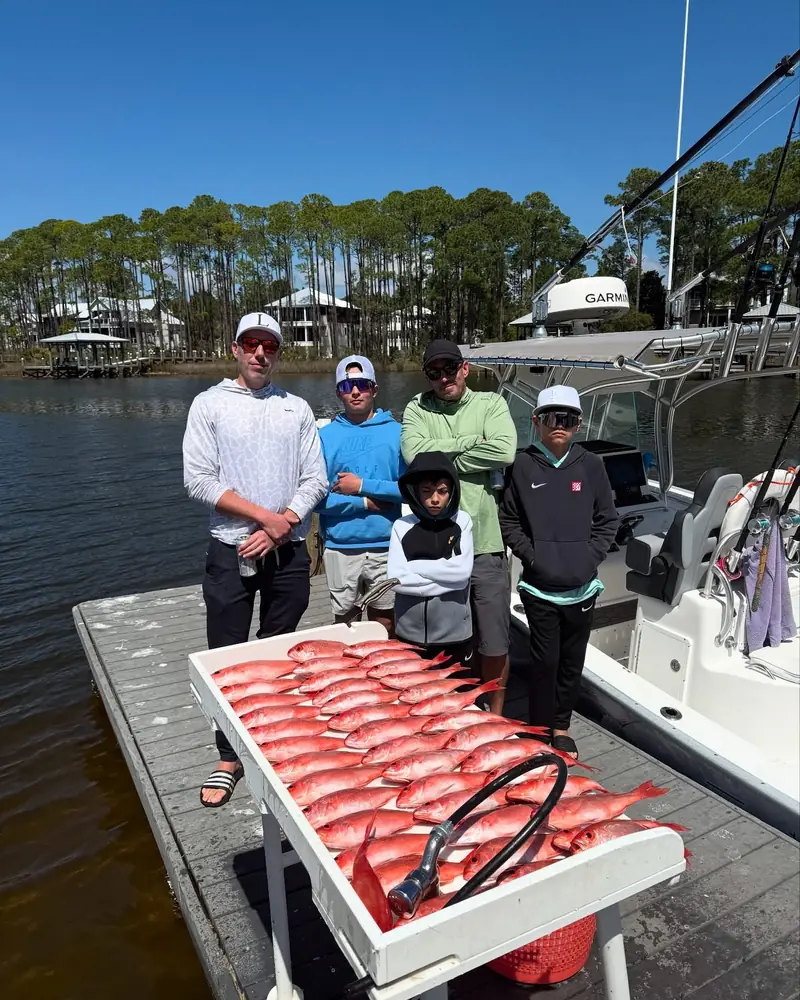
Ask most visitors when to fish the Emerald Coast and they will say June. Ask a captain who runs these waters year round and you will get a different answer. Santa Rosa Beach fishing is at its best from September through November, when the water cools, the bait moves, and the crowds that packed 30A all summer finally head home.
I am Captain Nick Tate, and I have been running charters out of Santa Rosa Beach since 2019. This is my honest breakdown of what fall fishing looks like here: what is actually biting, the difference between fishing the bay and running out into the Gulf, and how to figure out which trip fits your group. If you have never fished this stretch of coast before, start here.
What Makes Santa Rosa Beach Different
Santa Rosa Beach sits in the middle of a rare setup. On one side you have Choctawhatchee Bay, a big, protected estuary with grass flats, oyster bars, bayous and bridge pilings. On the other you have the Gulf of Mexico, where the bottom drops into structure, wrecks and eventually bluewater. Very few places on the Florida panhandle put both within easy reach of the same dock.
That matters more in fall than any other season. When a front rolls through and the Gulf gets sloppy, the bay is still fishable and the fish are still eating. When it lays down flat, we run offshore. You are not locked into one plan, which is why fall trips out of Santa Rosa Beach are so consistent even as the weather turns unpredictable.
The 30A corridor, from Dune Allen through Blue Mountain, Grayton, Seaside, Rosemary Beach and Alys Beach, all launches from the same water we fish. If you are staying anywhere along that stretch, you are minutes from the boat.
What’s Biting Around Santa Rosa Beach in the Fall
Bull Redfish
Fall is redfish season, plain and simple. As water temperatures drop, the big bull reds school up and move through the pass and along the beach, and they are not shy about eating. Hooking a 30-plus-inch red is a genuine arm-burner and it is the fish most of my fall guests remember. These bigger fish go back in the water to spawn again, which means you get the fight and the photo without touching the population.
Slot-sized reds stay thick on the flats and around the oyster bars in the bay too, and those are excellent eating. Redfish are the headline species on our inshore fishing trips, which stay in the calm, protected water of Choctawhatchee Bay.
Flounder
October is the month flounder anglers wait for. As the fish stage up to move out through the pass toward the Gulf, they stack around structure, drop-offs and the edges of the channels. A good fall flounder is one of the best meals that comes out of this bay, and they are a fantastic target for kids because the bite is subtle and the fight is manageable.
Sheepshead and Black Drum
Sheepshead start showing up in numbers as the water cools, holding tight to bridge pilings, dock structure and any hard bottom they can find. They are notorious bait thieves and genuinely fun to figure out. Black drum work the same structure and will happily bend a rod for anyone who wants steady action rather than one big fish.
Speckled Trout
Trout fishing gets very good in fall as the specks push onto the grass flats and into the bayous to feed. Early mornings on a falling tide are hard to beat. This is another species that keeps everyone busy, which makes it a great option for families and newer anglers.
King Mackerel and Spanish Mackerel
Out in the Gulf, the fall king mackerel run is one of the highlights of the year. As bait pours down the coast, the kings follow, and when one eats you will know it: the reel screams and nobody on the boat is sitting down. For the full rundown on the fall run along the beaches, see our guide to fall fishing on 30A. Spanish mackerel hold closer to the beach and provide nonstop action. Both are targeted on our offshore fishing trips.
Bottom Fish, Mangrove Snapper and Jack Crevalle
The fall bottom bite stays strong on the structure offshore, and mangrove snapper are a reliable, great-eating target. Jack crevalle round out the mix and are the definition of a fish that fights well above its weight class. For groups that want to run farther and chase the bigger pelagic species roaming the deep water, our bluewater fishing trips go looking for them.
A note on regulations: seasons, size limits and bag limits change through the year and are set by the Florida Fish and Wildlife Conservation Commission for state waters and NOAA Fisheries for federal waters. You can check current saltwater rules at MyFWC and federal Gulf species seasons through NOAA Fisheries. On a charter, that is my job to track, not yours.
Inshore or Offshore: Which Trip Should You Book?
This is the question I get more than any other, so here is how I answer it.
Book an inshore trip if:
You have kids on board, someone in the group gets seasick, you want a shorter half-day outing, or you want a high number of bites rather than a shot at one big fish. Inshore trips stay in Choctawhatchee Bay on our 22′ Cape Horn, the water is calm, and you are fishing structure and flats for redfish, trout, flounder, sheepshead and black drum. This is the trip for a family vacation day on the water.
Book an offshore trip if:
You want bigger fish, you are comfortable in some chop, and you have a full day to give it. Offshore runs take you out into the Gulf to fish structure and chase the fall king mackerel run and bottom species. The fight is heavier, the fish are bigger, and the day is longer.
Book a bluewater trip if:
You are a serious angler chasing the deep-water pelagics and you want the full big-water experience. These are our longest days and our farthest runs.
Book a sunset cruise if:
Not everyone in the group wants to fish, and that is completely fine. Our sunset cruises are a two-hour ride on the water at the best time of day on the Emerald Coast. Fall sunsets here are worth the trip on their own.
Still not sure? That is what I am here for. Tell me who is coming, how much time you have and what you are hoping for, and I will steer you to the right trip. You can see what recent trips have looked like in our photo gallery, read a bit about how we run things on our about page, or just get in touch and we will sort it out.
A Few Things That Make Your Fall Trip Better
Watch the fronts, not the calendar. Fall weather here moves in waves. The two or three days after a front passes are often the best fishing of the month. If your schedule has any flexibility, tell me when you book and I will help you pick the best window.
Mornings are worth it. Cooler water and a moving tide early in the day is when the bay comes alive, especially for trout and redfish.
Book earlier than you think. Fall is quietly one of our busier seasons because the people who know this coast come back for it. Weekends and holiday weeks fill first.
Bring layers. A 60-degree morning on the water in October feels colder than 60 degrees on the beach. You will shed the jacket by 10 a.m.
Frequently Asked Questions
Is fall a good time to go fishing in Santa Rosa Beach?
It is one of the best times of the entire year. Cooling water triggers a heavy feeding response across nearly every species, the fall bait migration pushes predators through our waters, the weather is comfortable, and the summer crowds are gone. Many local anglers consider September through November the peak of the season.
What fish can you catch in Santa Rosa Beach in the fall?
In Choctawhatchee Bay you are targeting redfish, speckled trout, flounder, black drum and sheepshead. Out in the Gulf the fall lineup includes king mackerel, Spanish mackerel, mangrove snapper, jack crevalle and a range of bottom species depending on current seasons.
What is the difference between bay fishing and deep sea fishing here?
Bay fishing stays inside Choctawhatchee Bay in calm, protected water, fishing flats, oyster bars and structure for inshore species. Deep sea or offshore fishing runs out into the Gulf for bigger species around structure and open water. Bay trips are calmer, shorter and better for families. Offshore trips are longer, rougher and target larger fish.
Do I need a fishing license to fish with a charter?
No. Everyone on board is covered under the captain’s saltwater fishing license, so there is nothing for you to buy or arrange beforehand.
How far in advance should I book a fall fishing trip?
As early as you can, especially for weekends and holiday weeks. Fall books faster than most visitors expect because repeat guests plan around it. If you are traveling to 30A in the fall, reach out as soon as your dates are set.
Can you take kids and beginners?
Absolutely, and fall is a great time for it. Inshore trips in the bay stay in calm water with steady action from trout, redfish and flounder, which keeps kids engaged. No experience is needed. We handle the gear, the bait and the instruction.
Where do you pick up for trips out of Santa Rosa Beach?
We operate out of Santa Rosa Beach, right in the middle of the 30A corridor, so we are a short drive from Dune Allen, Blue Mountain Beach, Grayton Beach, Seaside, WaterColor, Rosemary Beach and Alys Beach. Departure details are confirmed when you book.
Ready to Fish?
Fall on this coast is the season locals look forward to all year. If you want in on it, take a look at our trip options or reach out directly and we will find you a date. You can also browse more seasonal guides and fishing reports on our blog.